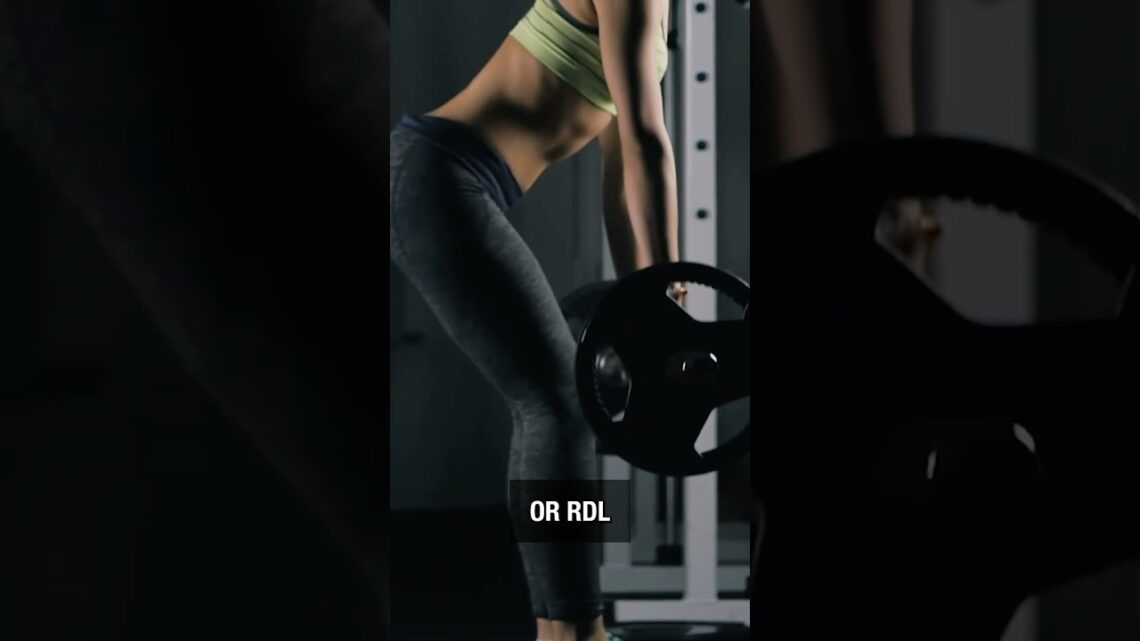
STOP Messing Up RDL’s! (I’M BEGGING YOU)
October 17, 2026Romanian deadlift form starts with one movement: the hip hinge. If you want to build bigger hamstrings and glutes with RDLs, you need to understand how to move your hips instead of simply bending forward to lower the weight. In this video, I’ll show you a common Romanian deadlift mistake and a simple cue to help you get more out of every rep.
The Romanian deadlift is a great exercise for training your hamstrings, glutes, and posterior chain. If you’re struggling with RDL technique, start by practicing the movement that makes the exercise work.
The mistake? Thinking only about lifting the weight straight up and down. While the bar travels mostly vertically, the movement you need to focus on is your pelvis traveling backward and forward. Your hips move back as you lower the weight, then return forward as you stand tall. That is the foundation of a proper hip hinge.
When you focus on reaching the weight toward the floor, it becomes easy to lose sight of where the movement should come from. The goal of a Romanian deadlift isn’t to see how low you can drop the bar. It’s to load your hamstrings and glutes through a controlled range of motion while maintaining your position.
Here’s how to practice the hip hinge before your next leg workout. Place your hands in the creases where your thighs meet your pelvis. From there, push your hips backward and let your torso tip forward with the movement. Use your hands as a reminder of where you want to fold.
Imagine there’s an open drawer directly behind you. Now try to close that drawer with your butt. You’re reaching your hips back to shut it, rather than just dropping your chest toward the floor. That simple visual can make the Romanian deadlift much easier to understand.
Practice a few controlled repetitions without weight first. Once you understand the movement, apply the same cue to your barbell Romanian deadlift or dumbbell RDL. The equipment may change, but the basic hip hinge stays the same: hips back on the way down, then stand tall to finish.
Keep a slight bend in your knees rather than locking them straight or turning the movement into a squat. Keep the weight close to your legs and lower only as far as you can control the hinge while maintaining a stable trunk. Your range of motion should match your ability to hold that position, not an arbitrary target on the floor.
On the way back up, bring your hips forward as you return to standing. Finish tall without leaning backward to exaggerate the lockout. Think about repeating the same controlled movement on every rep, instead of allowing heavier weight to change your technique.
Your lower back muscles contribute to stabilizing the movement, but that doesn’t mean your lower back should drive the lift. Learning to hinge helps you organize the exercise around hip movement and avoid turning each repetition into uncontrolled bending through your spine. Good technique and an appropriate load both matter.
Whether you’re learning how to do Romanian deadlifts for the first time or refining your hamstring workout, start with this drill. Before adding more weight, make sure you can send your hips back, control the descent, and return to standing with consistent form.
For more exercise form tips, muscle building workouts, and strength training advice from Jeff Cavaliere and ATHLEAN-X, subscribe so you never miss another video.
Subscribe here:
http://bit.ly/2b0coMW
Get Your Workout & Meal Plan:
📝 https://www.athleanx.com
Connect With Me:
👉 https://www.instagram.com/athleanx
For complete step-by-step workout programs, visit athleanx.com and use the program selector to find a training plan suited to your goals.
Jeff Cavaliere MSPT, CSCS served as both the head physical therapist and assistant strength coach for the New York Mets. Jeff earned his Masters of Physical Therapy and Bachelor’s of Physioneurobiology from the College of Health Sciences University of Connecticut Storrs. He is a certified Strength and Conditioning Specialist by the National Strength and Conditioning Association (NSCA).